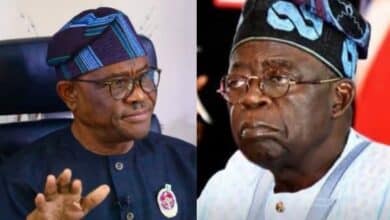
How President Tinubu Outsmarted Northern Governors On State Police, Put Them In A Tricky Spot

Nigeria’s president, Bola Ahmed Tinubu on the 26th of November, announced the federal government’s endorsement of state police. A decision that came in response to recent wave of insecurity– school children abductions, attacks on worship centers by armed bandits.
In the face of Nigeria’s age long insecurity issues that appear to be aggravating as time passes by, there have been calls for constitution amendment that will provide for legal framework and backing for the Nigeria’s states of the federation to have their police structure that will be directly answerable to the states’ governors. The constitution amendment to incorporate state police in Nigeria will spell out jurisdiction and separation of power between the states’ police and the federal police in the manner akin to the United States of America.
The introduction of state police into the Nigeria’s security system has been tipped as the panacea to Nigeria’s deteriorating security situation especially as the federal security forces are seemingly overwhelmed with the responsibility of overseeing the whole country.

The agitation for state police has been popular in the southern part of Nigeria where people of all divides believe that a state police will drastically curb rising crime in the region. However, the politicians and political leaders from the northern Nigeria, appear averse to the idea of remodeling Nigeria’s security system to incorporate state police. The reason for their lack of interest in state police is not precisely known; however, the unofficial knowledge is that the introduction of state police in Nigeria will assumably harm the “northern interest”– this northern interest is assumably tied to the nomadic Fulani herdsmen who move from the northern Nigeria to the southern Nigeria with their herds.
The Fulani herdsmen have been linked to carrying out heinous crimes in their host southern communities. There are reports of their invasion of farmlands and deliberate destruction of crops, targeted kîlling of the members of the communities they perceive hostile to them. The Fulani herders have also been linked to kidnæpping for ransom, ràpe and terrórism.
Hence, to prevent the herdsmen from possible conflict with security force of their host southern state, the northern Nigeria politicians and elite had in the past frustrated the idea of state police in Nigeria.
Recall that the late governor of Ondo state, Rotimi Akeredolu led the then governors of the southwestern states into establishing a regional security network known as “Amotekun” to provide security to the region at a time when armed Fulani herdsmen attacked communities in the region.
The gesture was emulated by the southeastern states’ governors who also founded similar security network.
These governors resorted to self-help due to the then Fulani president of Nigeria, Muhammadu Buhari’s lack of interest in state police while armed Fulani herdsmen invaded communities in southern states of the federation. There were arguments from northerns over the constitutionality of the regional security network founded by the southern states.
With president Bola Ahmed Tinubu, a southerner coming on board, two years into his administration, he has given presidential order to states willing to establish and fund a state police to go ahead while the national assembly consider the legal framework for the state police.
Hence, president Tinubu has been applauded for his wisdom and cleverness in handling such a complex issue with far reaching national implication on the country’s future and wellness. The president by stating that states “willing” to establish a state police can do so, put the northern governors who have been indifferent to the idea, on their toes.
The president cleverly dodged the distraction that could come from making state police compulsory to all states. By his statement, he implies that the bulk of the security responsibility of every state now rests on the shoulders on the state’s governor.